 Run·Engage
AI assisting your team
Your people don't get a chatbot. They get their work, handed to them.
Every task arrives with its evidence and its deadline. The AI does the first pass. The person does the judgment. Nobody replaced.
More output per person, never people automated away.

The four things it does for every seat.
 1 · Semi-automates.
The draft, the lookup, the follow-up, the sorting. Done before the person sits down. So more work gets performed.
 2 · Brings the task.
Not a message in a thread. A typed unit of work, with the evidence attached and a clock on it, routed to the right person.
 3 · Monitors the work.
Notices when it isn't done. Escalates silence. A handoff that stalls is seen the hour it stalls.
 4 · Feeds back.
Privately. One coaching note per person, per week. Never a leaderboard.
Five things that used to live in chat.
Where work goes to die.
Someone meant to. Nobody was assigned. Now it is a task with a name on it and a due date.
The finding, the receipt, the screenshot. Attached to the task, not lost in a thread.
From reception to the technician to billing. Each step a state. A stall is a signal.
Done, but done to protocol? Verified against the standard before it closes.
Because giving it in public is cruel and in private takes time. Now it is private, weekly, and one thing at a time.
So what is “the task economy,” anyway?
Every kind of work your business does gets a type. An intake form. A set of states with handoffs between roles. A rule that routes it to the right person. A deadline that escalates.
Work that used to live in chat limbo becomes a tracked unit. Originated, assigned, assisted, verified, measured, reported, coached, improved. The whole loop. Not a segment of it.

What the machine actually does.
The reply, the quote, the summary. Ready for a human to correct and send.
By type, by rule, by role. Reception gets reception's work. The specialist gets the specialist's.
Business-hours deadlines per state. Paused when it should pause. Escalated up a ladder when it runs out.
Suggested actions queue for one-tap confirmation. Managers confirm only the final step of an escalation.
How we compare
| Run·Engage | A copilot | A task board | |
|---|---|---|---|
| Who originates the work | the platform, from the evidence | the person | the person |
| What arrives with it | evidence + a deadline | nothing | a title |
| Silence | escalated | unseen | a stale card |
| Feedback | private, weekly, one note | none | none |
| The person's role | judgment | typing faster | bookkeeping |
What your team will actually feel.
 The morning is already sorted.
The queue is typed, routed, and clocked before the first coffee.
 Nothing falls between two people.
The handoff is a state, not a hope.
 The draft is waiting.
They correct, they decide, they send. They stop typing from scratch.
 Friday's note is for them alone.
One thing to practice. Nobody else sees it.
“Monitors the work” is not surveillance.
Reports go to each person alone. Comparisons only within like-for-like scopes. A sample too small says “too small” instead of a misleading number. Incidents listed one by one, never averaged into a score. Exactly one coaching observation at a time. Allocation, not ranking. Owners and staff read the same sentence.
What stays human. In writing.
Design decisions. Key-account relationships. Final pricing. Negotiation. Named per client. Output rises. People move to judgment.
You have a choice to make.
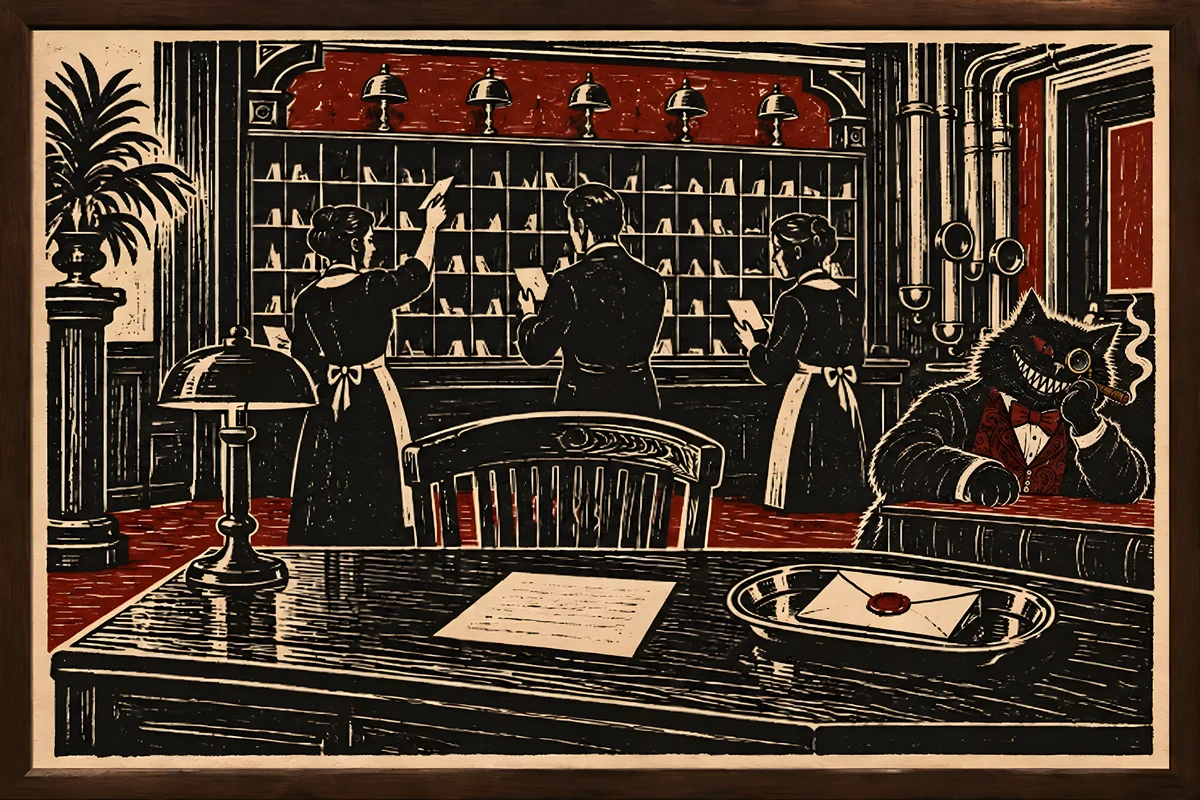
The work is generated, routed and watched.
The person is backed, not replaced.